


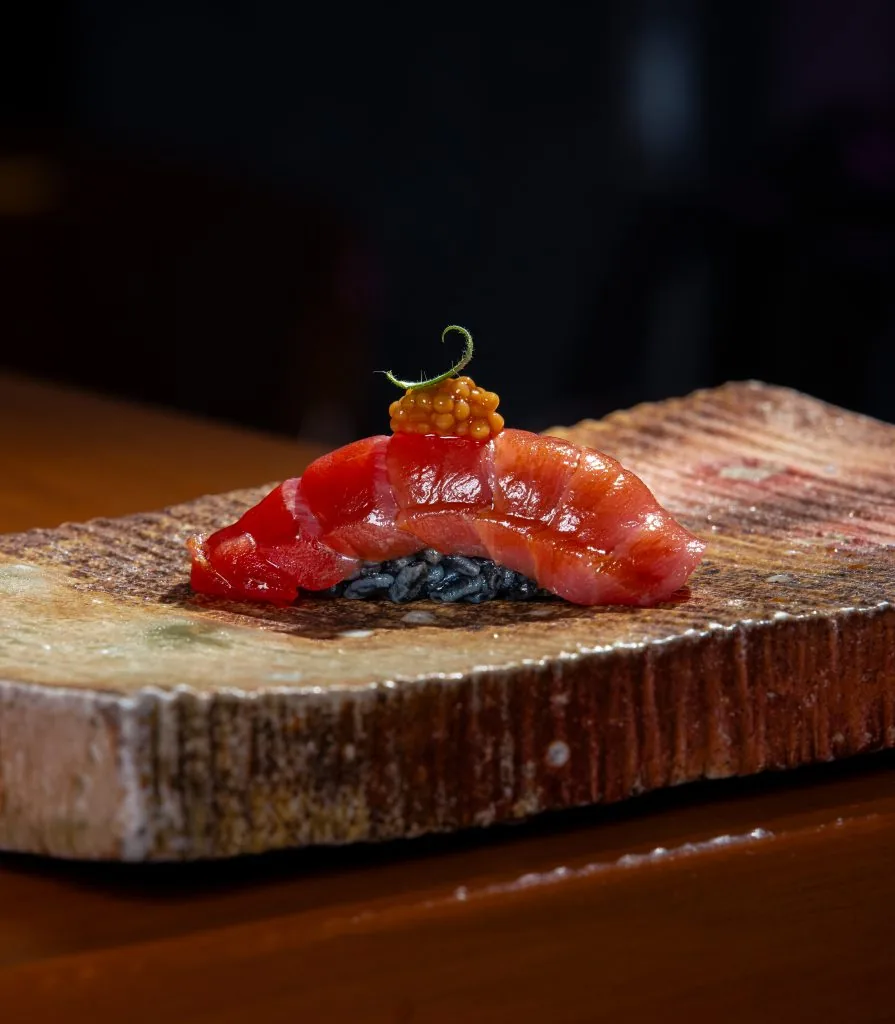
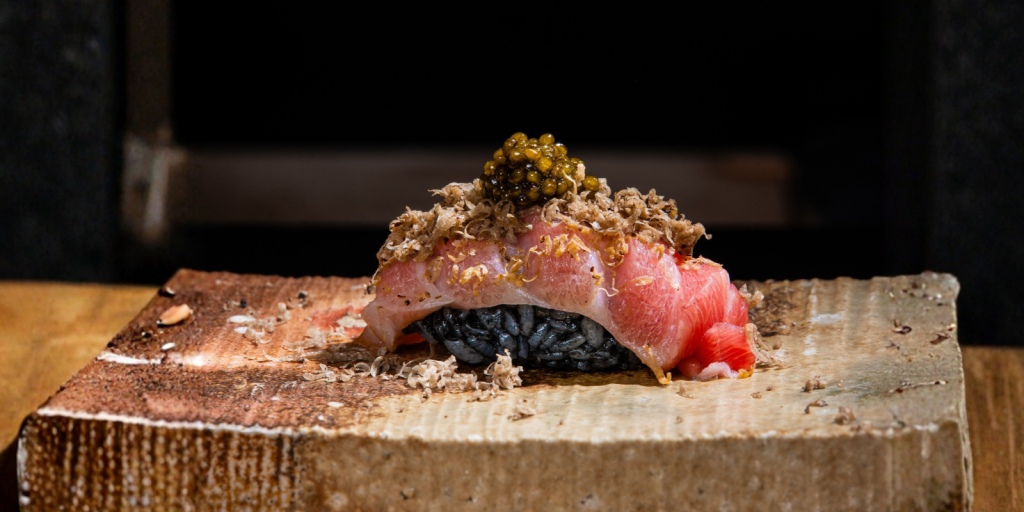
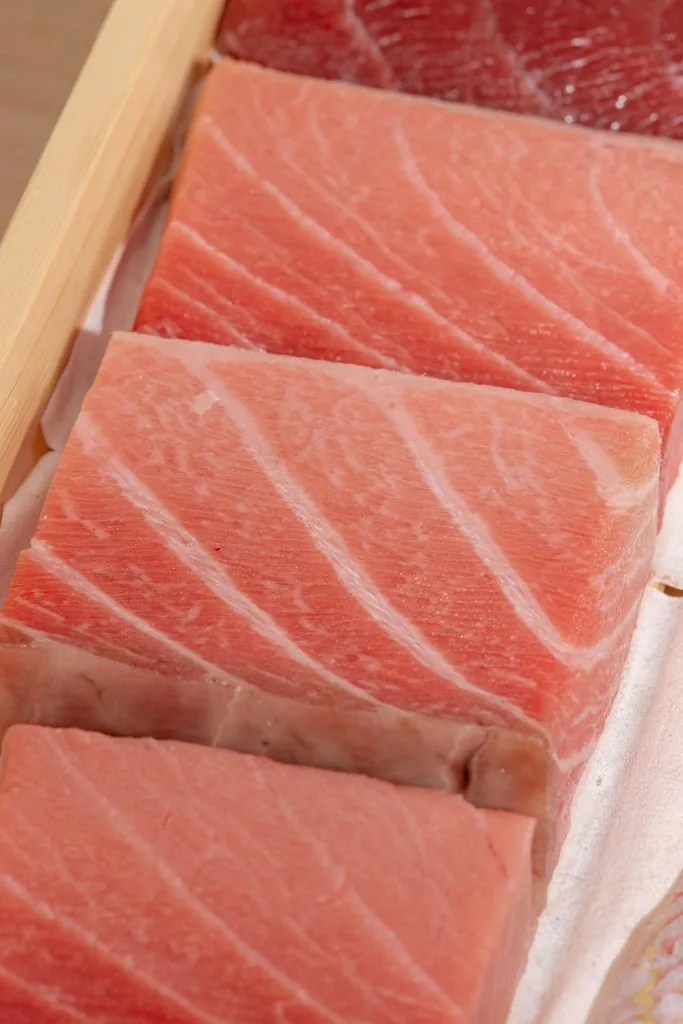
Ōtoro, the richest cut of bluefin tuna, is sourced from the lower belly where the fat is most densely and finely distributed. This structure yields a soft, smooth texture that nearly dissolves upon contact with the tongue, making ōtoro one of the most renowned cuts in omakase sushi.
While akami showcases the clarity of lean meat, and chūtoro balances lean and fat, ōtoro leans fully into richness. Yet, its value extends beyond mere fat content. The true essence lies in how the fat is managed to maintain the clarity of flavor, structure, and rhythm when shaped into nigiri.
In omakase, ōtoro often stands out not simply for the luxury of the ingredient, but for the lingering sensation it leaves on the palate: soft, rich, and enduring. However, if not handled with care, its richness can overwhelm, detracting from the inherent subtlety of this cut.
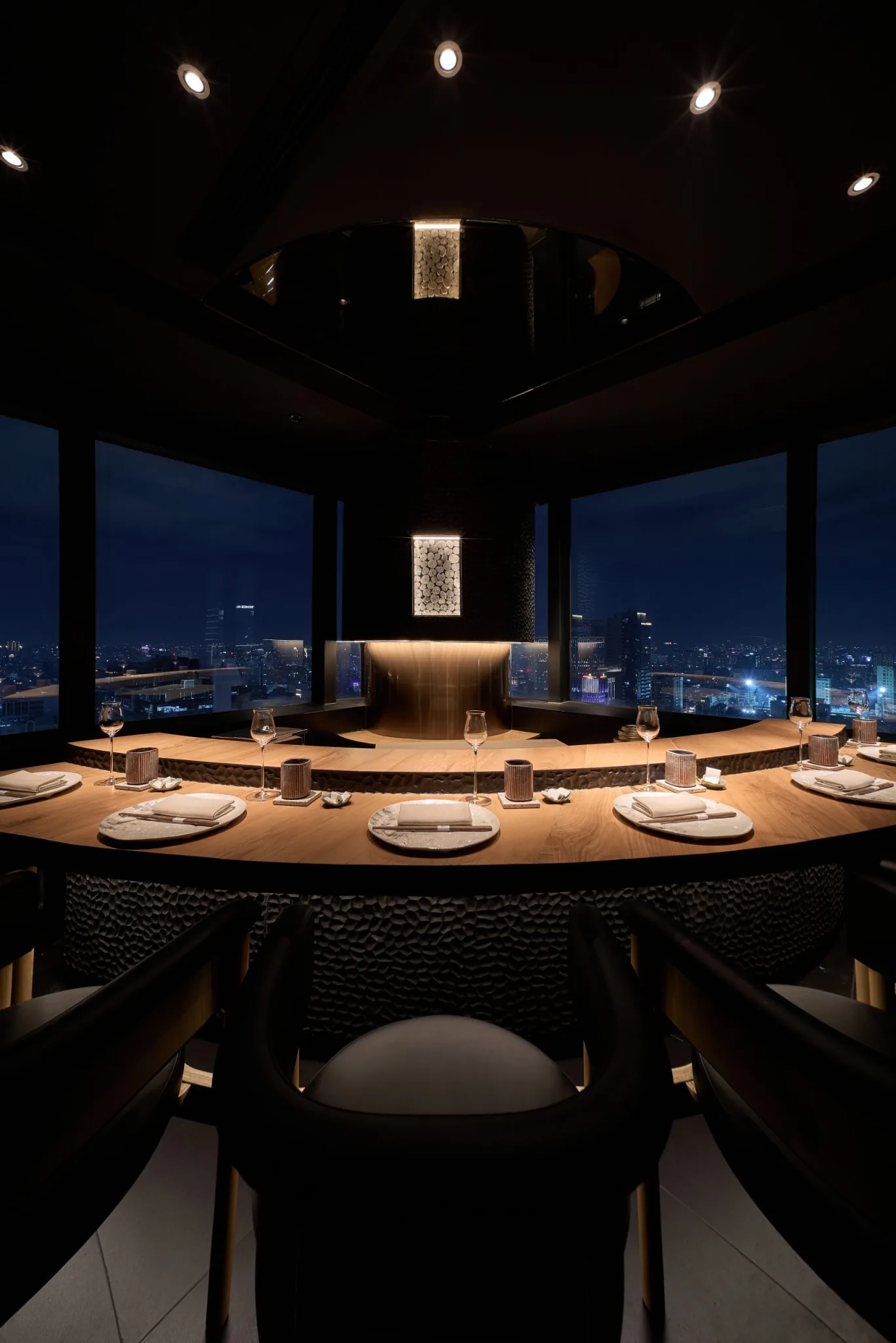
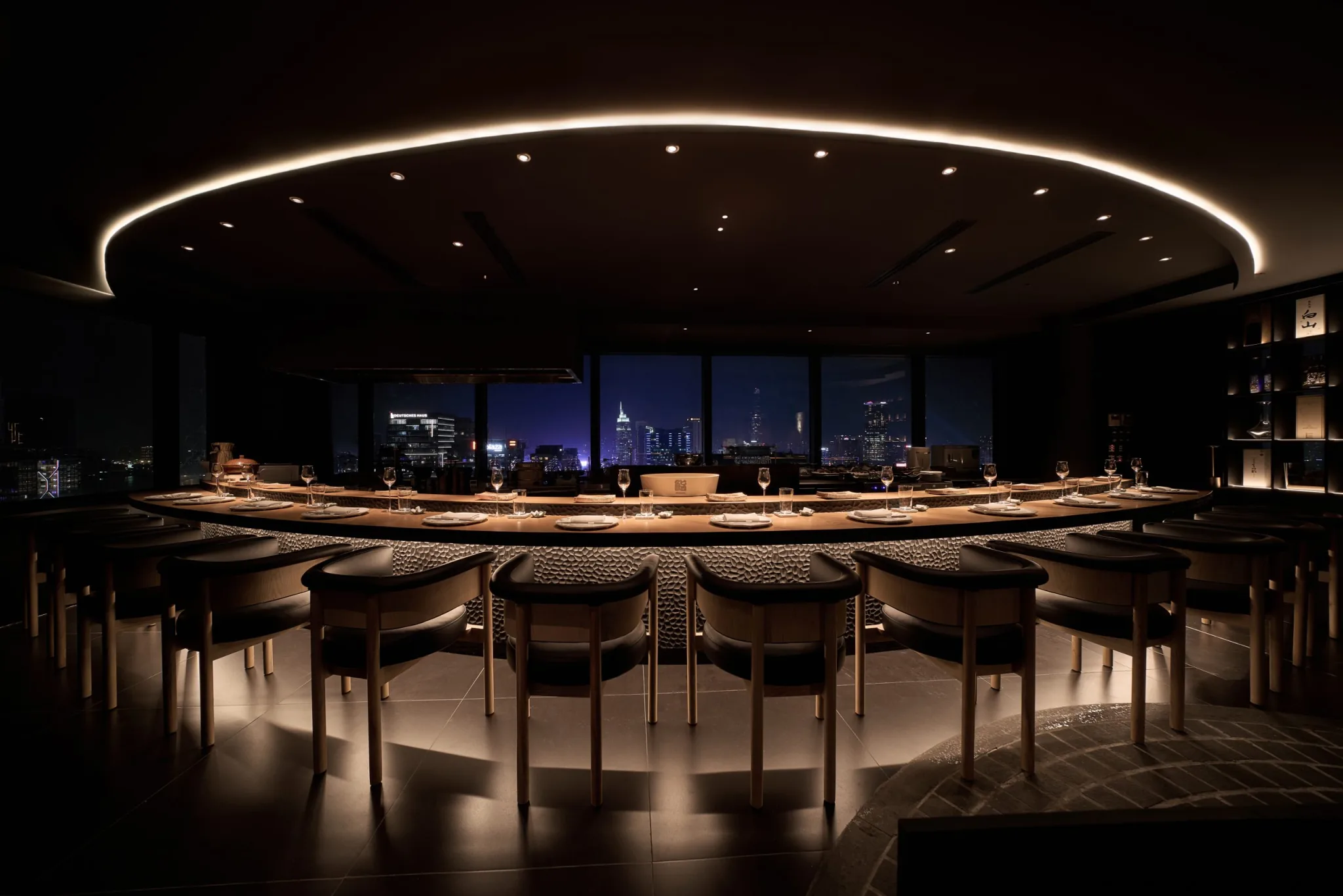
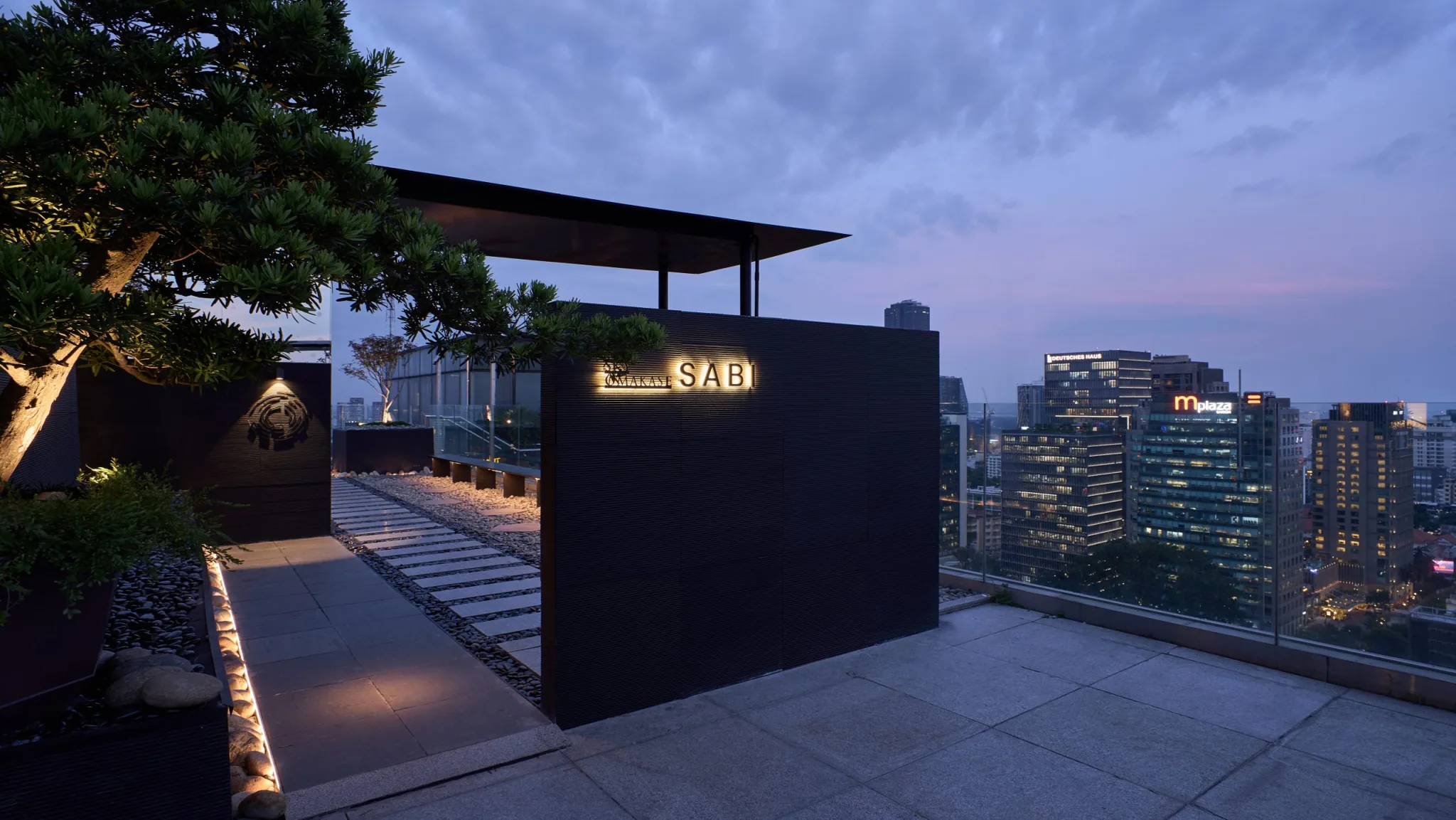
At SABI Sky Omakase, Ho Chi Minh City, ōtoro is refined through the aburi technique. A gentle touch of binchotan charcoal heat lightly melts the outer fat layer, enhancing its aroma, while the inside retains its signature softness and rich texture. A delicate wisp of smoke adds depth without overshadowing the fish’s natural essence.
When served at its ideal state, ōtoro offers a richness that is seamless, not heavy. The fat becomes more cohesive, the texture softer yet supported, with a lingering finish. This is when ōtoro fully reveals its worth, not just as the fattiest part of the tuna, but as a cut that demonstrates how richness can be guided by technique and restraint in an omakase experience in Ho Chi Minh City.