
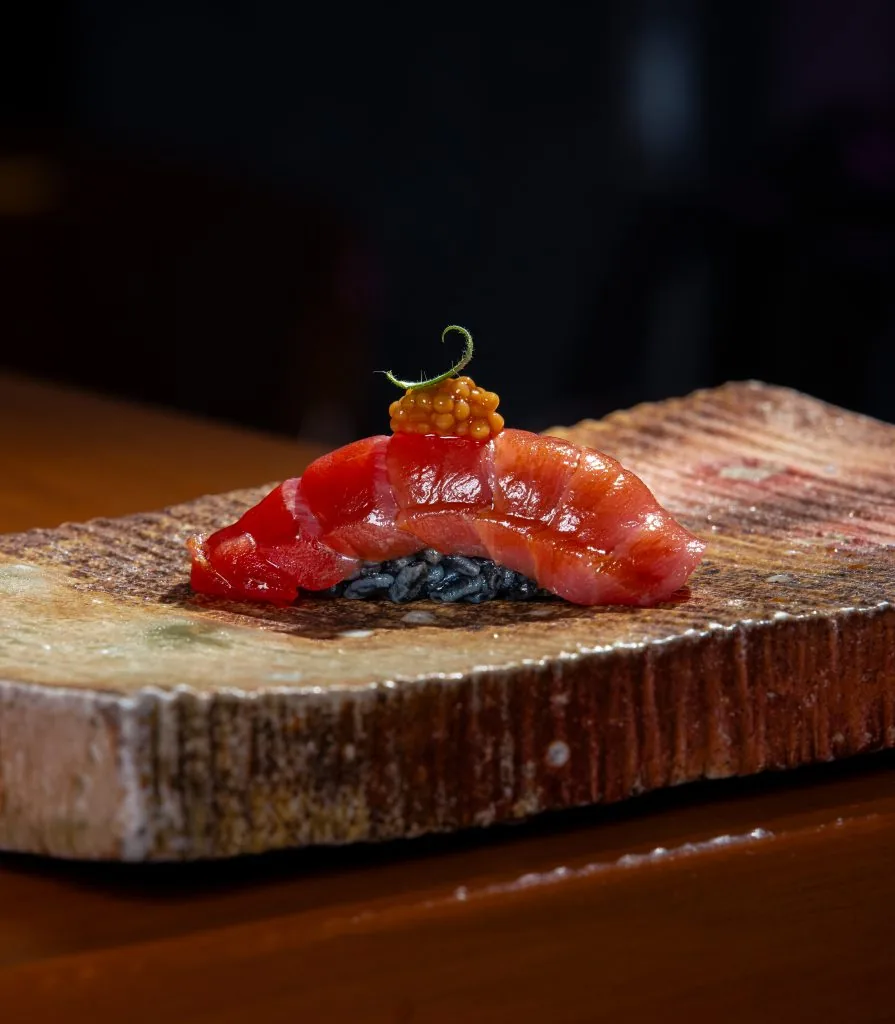
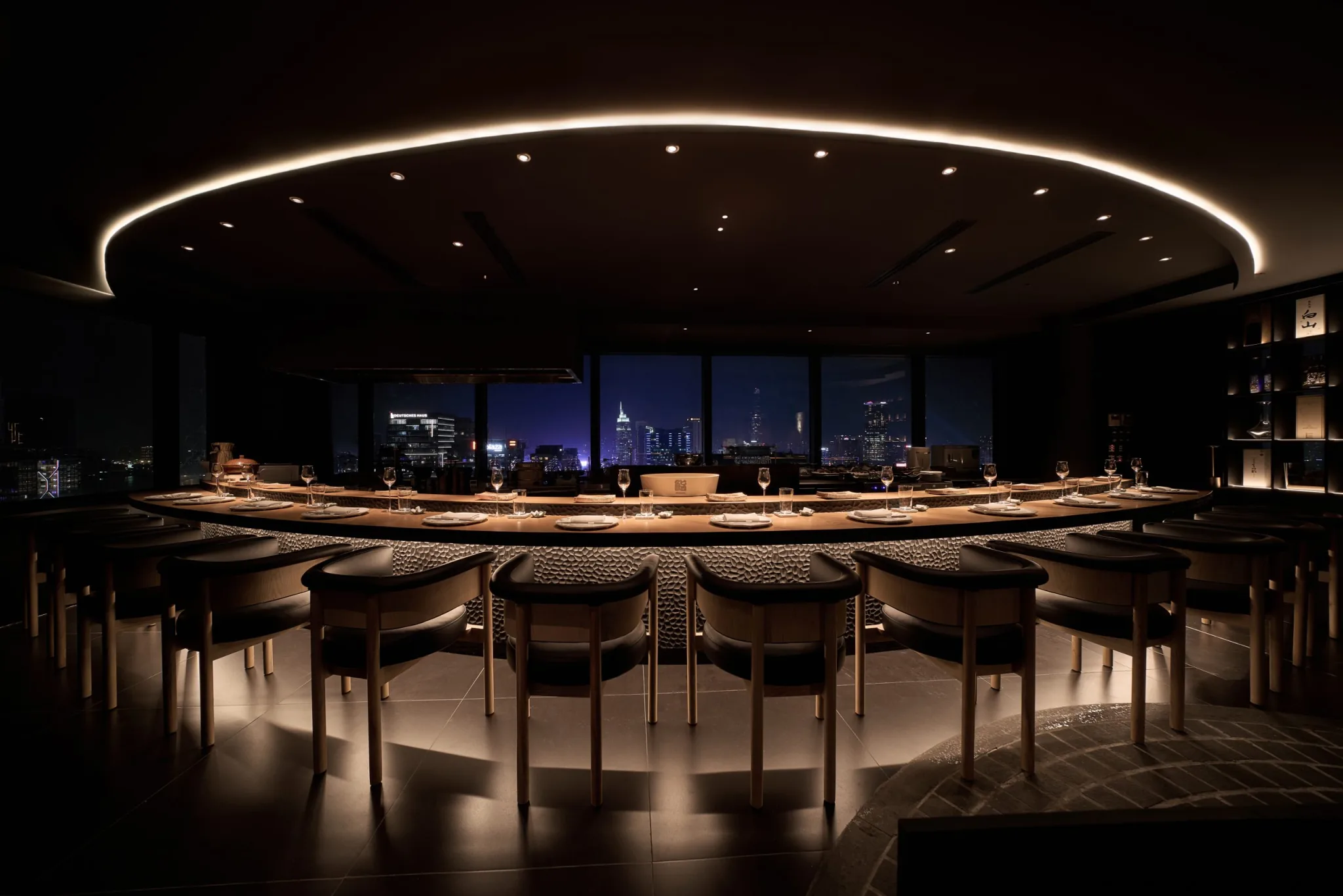

Chūtoro, the section of bluefin tuna between akami and ōtoro, is typically sourced from the upper belly and back near the belly. With marbled fat interwoven in its flesh, chūtoro is seen as the cut that naturally balances richness, structure, and depth of flavor.
If akami represents clarity and leanness, and ōtoro leans towards richness with an almost immediate melt, chūtoro exists at the intersection of these extremes. The lean part remains distinct enough to retain structure and precise fish flavor, while moderate fat provides smoothness, roundness, and a lingering finish on the palate.
In omakase sushi, chūtoro is often regarded as the most balanced part of the tuna. It does not impress with stark contrasts, but persuades with harmony, where richness does not overwhelm, the lean is not dry, and the whole is kept stable, clear, and complete.
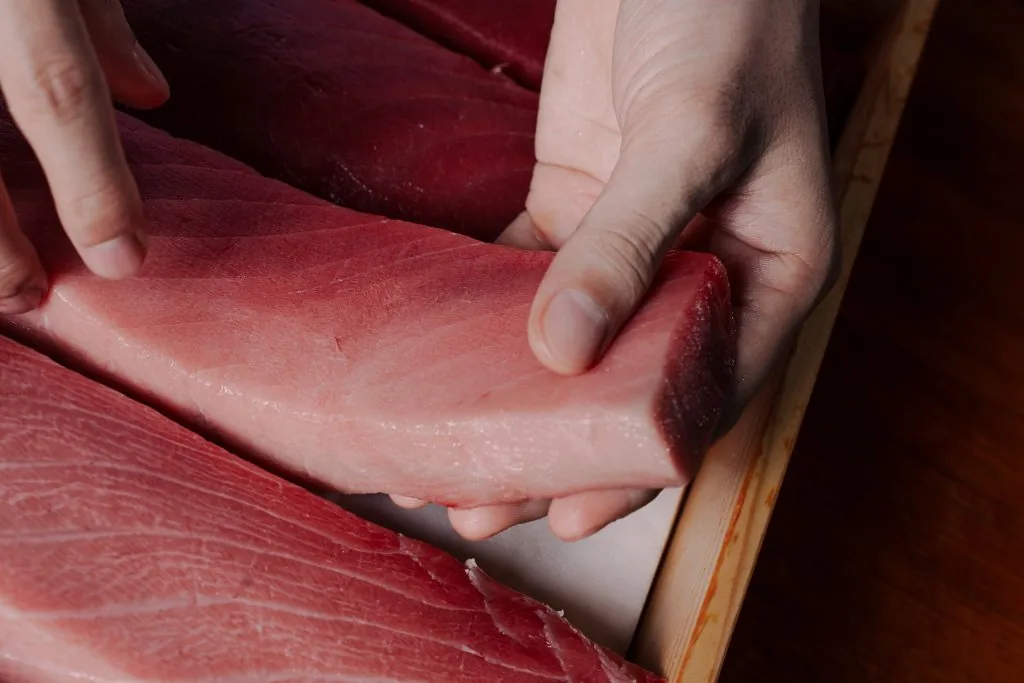
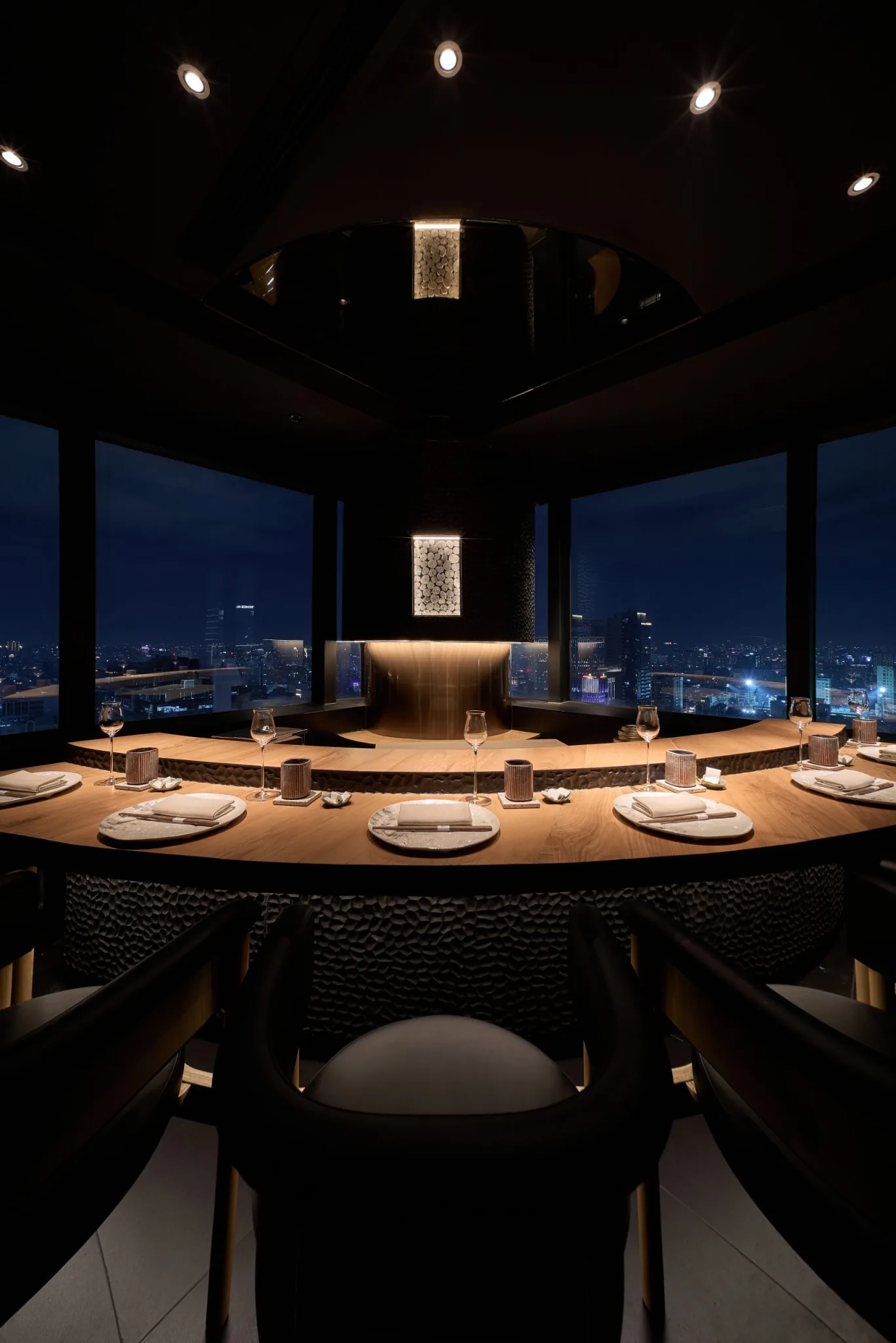
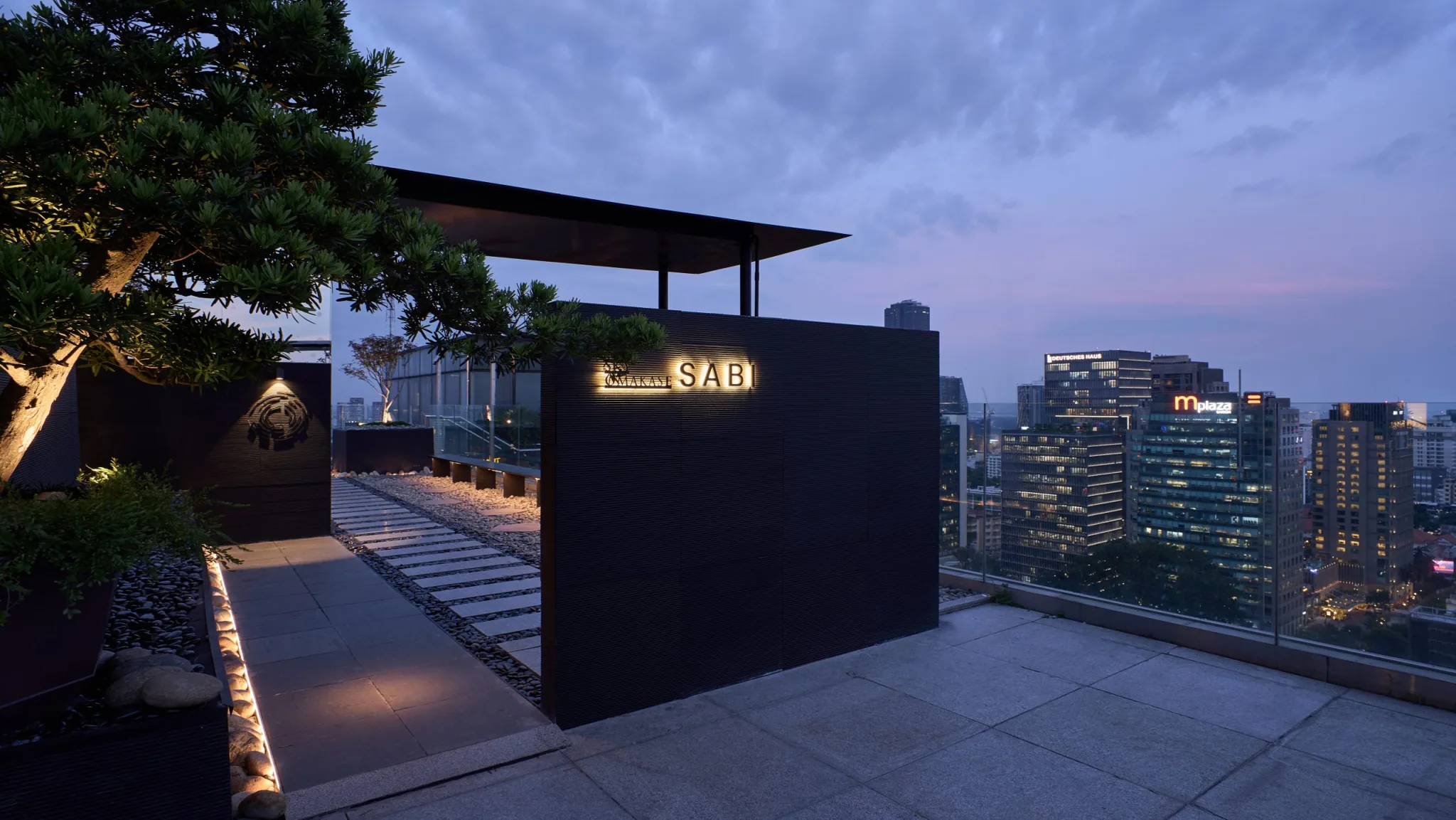
At SABI Sky Omakase, Ho Chi Minh City, chūtoro is dry-aged for 25 days under carefully controlled temperature and humidity. This process enhances the depth of flavor, concentrates umami, and softens the texture, while preserving the inherent clarity of the ingredient. Dry-aging here does not alter the essence of chūtoro, but allows this cut to reach a more defined version of itself.
When served in its ideal state, chūtoro offers a smooth, rounded, and unhurried sensation on the tongue. The richness becomes more cohesive, the natural sweetness opens up more clearly, and the finish lingers while maintaining clarity. This is when chūtoro truly reveals its value in an omakase experience in Ho Chi Minh City, not extreme in any direction, but achieving a depth of balance that is memorable.